Do you want to explore the intersection between psychology and the law? Welcome to the Forensic Psychology Podcast! Each episode will explore the science, practice, and business of forensic psychology with practical conversations you won’t find in your graduate training.
In this very first episode, Dr. Casey Mangnall introduces the Forensic Psychology Podcast.
Meet Dr. Casey Mangnall
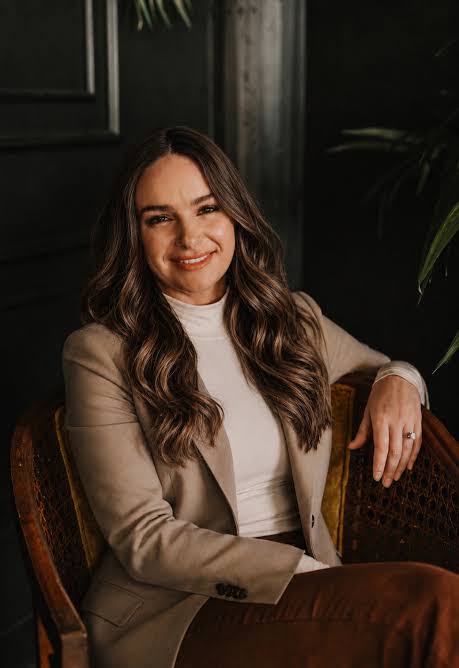
Dr. Casey Mangnall is a licensed psychologist, forensic psychologist, and founder of Utah Center for Psychological Services. She specializes in comprehensive psychological and forensic assessments, including evaluations for ADHD, autism, trauma, learning difficulties, and complex diagnostic questions.
A graduate of the University of Denver, Casey combines rigorous, evidence-based assessment with a strengths-based and human approach. She is particularly interested in using psychological evaluation not simply to assign a diagnosis, but to help people understand their experiences and find a clearer path forward.
Visit Utah Center for Psychological Services and connect on Instagram, Psychology Today, and LinkedIn.
In this podcast:
- About the host, Dr. Casey
- Some of the things we’ll explore on the podcast
- Why I started this podcast
About the host, Dr. Casey
Hi, I’m Dr. Casey Mangnall, your host for the Forensic Psychology Podcast.
I’m a licensed psychologist, a forensic psychologist, and the owner of Utah Center for Psychological Services, a group practice specializing in comprehensive psychological evaluations.
I have wanted to create this podcast for years! Because forensic psychology is one of those fields that people find fascinating, but there aren’t that many places to learn what the work actually looks like.
Dr. Casey Mangnall
My background is primarily in psychological assessments, and my interest started even before grad school. During grad school, I tried out as many practicum placements as I could, especially doing psychological assessments!
It was my love for assessment that actually got me interested in forensic psychology: I loved the idea of applying my clinical knowledge and skills to a legal setting.
Dr. Casey Mangnall
Over the years, I’ve now worked in both public and private settings for forensic practice.
Some of the things we’ll explore on the podcast
As I mentioned, this podcast will dive into a wide range of topics within forensic psychology.
For example, some of the things we’ll cover include how you:
- Conduct a good forensic evaluation
- Answer a psycholegal question without drifting outside of your scope or role
- Write a report that’s useful to the court
- Deal with incomplete or conflicting information
- Think about response style
- Prepare for testimony
- How clinical science can change forensic practice
- Build a forensic practice
Why I started this podcast
First, one of the main reasons why I launched the Forensic Psychology Podcast was because I wanted more information about forensic psychology in one place.
When I was training and learning about it, I had to research and look for information from all corners.
Here, my goal is to bring it all together in a way that makes it easier to digest, find, and integrate what you learn into your real lived experiences in private practice.
[I started this podcast because] I wanted there to be another place where people could hear practical conversations about the work itself, and not just: “Here’s the legal definition of competency,” but “What do you actually do when the defendant gives you information that doesn’t make sense?” Or, “What do you do when records contradict the interview?” Or, “How much collateral information is enough?” … Those are the conversations I want to have here.
Dr. Casey Mangnall
Second, I want this podcast to be useful to people who don’t consider themselves forensic psychologists because therapists are often still required to work with the legal system from time to time.
Even if this isn’t your specialty, the information here would be useful and helpful to any therapist, regardless of specialization.
Third, I want to cover the business side and discuss the question: how do you build a forensic practice? Cancellations, marketing, how to charge for services, how to build relationships with attorneys, scaling, and so forth.
I hope to provide a resource that hopefully saves you from having to learn the hard way as I did. I can absolutely say that we opened the Utah Center for Psychological Services in 2023, and we scaled to a seven-figure business in less than three years … So it was a steep learning curve for me … And I’m hoping to share all sorts of things that I have learned along the way!
Dr. Casey Mangnall
Resources and Useful Links:
Visit the Utah Center for Psychological Services
Connect with Me:
Say hello on: Instagram, Psychology Today, and LinkedIn.
About The Forensic Psychologist Podcast
The Forensic Psychology Podcast explores the intersection of psychology, law, and private practice through practical conversations grounded in real-world forensic work. Each episode tackles the questions and challenges that psychologists and attorneys actually encounter, from conducting defensible evaluations and writing useful reports to handling conflicting information, preparing for testimony, and staying within the boundaries of the psycholegal question.
Beyond the clinical and legal side of forensic psychology, the podcast also explores what it takes to build and grow a successful forensic practice. Whether you’re an experienced forensic psychologist, a therapist who occasionally works with the legal system, an attorney who relies on psychological evaluations, or simply interested in the field, the Forensic Psychology Podcast offers practical insights, evidence-based frameworks, and lessons from the realities of doing this work.