How do you know whether the methods you’re using in a forensic evaluation will hold up in a legal setting? Can you confidently explain why you chose a particular test? What happens when clinical best practices and legal standards require you to think beyond the way you would approach a traditional evaluation?
In this podcast episode, Dr. Casey Mangnall speaks about legal guidelines for forensic evaluations.
Meet Dr. Casey Mangnall
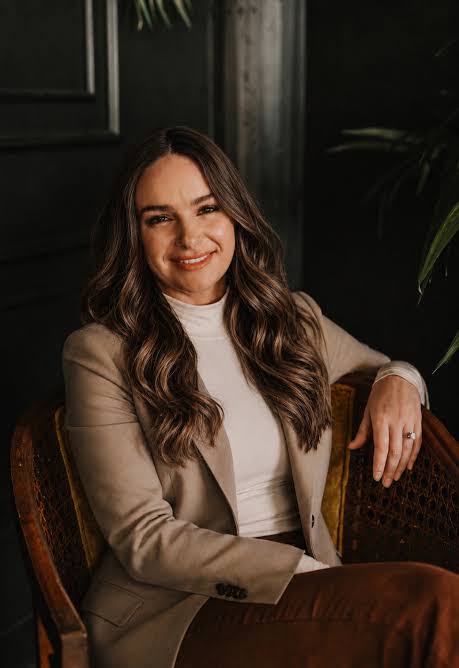
Dr. Casey Mangnall is a licensed psychologist, forensic psychologist, and founder of Utah Center for Psychological Services. She specializes in comprehensive psychological and forensic assessments, including evaluations for ADHD, autism, trauma, learning difficulties, and complex diagnostic questions.
A graduate of the University of Denver, Casey combines rigorous, evidence-based assessment with a strengths-based and human approach. She is particularly interested in using psychological evaluation not simply to assign a diagnosis, but to help people understand their experiences and find a clearer path forward.
Visit Utah Center for Psychological Services and connect on Instagram, Psychology Today, and LinkedIn.
In this podcast:
- Legal and clinical parameters
- “Why this method?”
- Two essential questions to ask yourself
- Multiple levels to the legal guidelines
Legal and clinical parameters
You don’t need a law degree to work as a forensic psychologist. You can get one if you’d like, or a course or certification, but it is not required.
You don’t need a law degree to do this work. You do, however, need to understand that once clinical work enters a legal setting, clinical acceptability is not the only standard anymore.
Dr. Casey Mangnall
Your clinical tests could be challenged, your clinical interpretations could be challenged, all because the legal aspect is involved.
Law and psychology are expected to challenge and support one another in pursuit of the psycholegal answer.
“Why this method?”
Imagine you are sitting at the stand, and an attorney asks you, “Doctor, why did you use this particular method?”
You need a better and stronger answer than, “Because I always give it!” Or, “It’s standard in clinical practice.”
When you are considering methods for forensic testing and evaluation, you need to consider questions like:
- How is this relevant to the legal question?
- What does it measure?
- Has the measure been validated?
- Is it appropriate for this examinee?
- What are its limitations?
- What does it add that you don’t already know?
These are the kinds of questions that sit at the intersection of clinical ethics and law.
If you’re failing to consider these things and you’re not following them, your reports or testimony could be excluded.
Dr. Casey Mangnall
Two essential questions to ask yourself
When you select a test or method for a forensic evaluation, you really need to understand and be able to explain the scientific foundation. So, when you are deciding on which tests or evaluations to administer, you have to consider:
1 – Is this method scientifically sound?
2 – Did I apply this scientific method appropriately?
We need the right test for the right construct, and we need to be using it for what it is designed to do, and make sure our conclusions are supported by the use of that test in that context. So the appropriateness of the test depends on the purpose.
Dr. Casey Mangnall
Multiple levels to the legal guidelines
There are different levels that we need to be thinking through when it comes to the legal guidelines that complement the clinical ones, such as:
- Statutes and case law
- Frye or Daubert
- Federal rules of evidence
I think one mistake that I see early career forensic psychologists make is assuming that every forensic evaluation follows the same roadmap, it does’t. Some evaluations are heavily prescribed by statute, others [need] considerable discretion … It’s really important therefore just to know what’s expected of you.
Dr. Casey Mangnall
Resources and Useful Links:
Visit Utah Center for Psychological Services
Practice of the Practice Network
Connect with Me:
Say hello on: Instagram, Psychology Today, and LinkedIn.
About The Forensic Psychologist Podcast
The Forensic Psychology Podcast explores the intersection of psychology, law, and private practice through practical conversations grounded in real-world forensic work. Each episode tackles the questions and challenges that psychologists and attorneys actually encounter, from conducting defensible evaluations and writing useful reports to handling conflicting information, preparing for testimony, and staying within the boundaries of the psycholegal question.
Beyond the clinical and legal side of forensic psychology, the podcast also explores what it takes to build and grow a successful forensic practice. Whether you’re an experienced forensic psychologist, a therapist who occasionally works with the legal system, an attorney who relies on psychological evaluations, or simply interested in the field, the Forensic Psychology Podcast offers practical insights, evidence-based frameworks, and lessons from the realities of doing this work.