Are you using an assessment instrument for the purpose it was designed to answer? What happens when a test doesn’t fully represent the population you’re evaluating? How do you prepare your materials to be reviewed in court?
In this podcast episode, Dr. Casey Mangnall discusses the ethical guidelines for forensic evaluations.
Meet Dr. Casey Mangnall
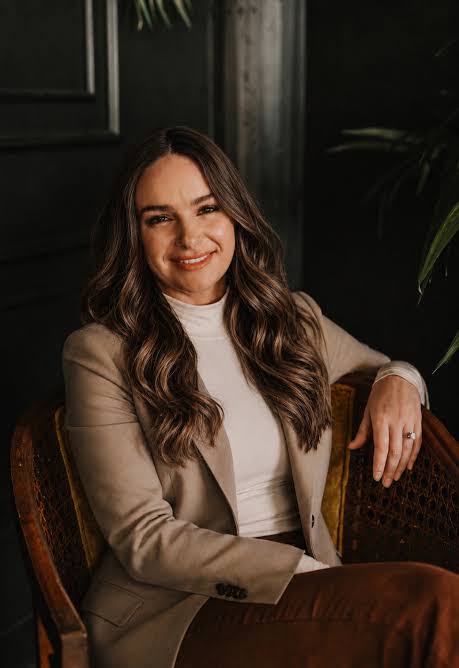
Dr. Casey Mangnall is a licensed psychologist, forensic psychologist, and founder of Utah Center for Psychological Services. She specializes in comprehensive psychological and forensic assessments, including evaluations for ADHD, autism, trauma, learning difficulties, and complex diagnostic questions.
A graduate of the University of Denver, Casey combines rigorous, evidence-based assessment with a strengths-based and human approach. She is particularly interested in using psychological evaluation not simply to assign a diagnosis, but to help people understand their experiences and find a clearer path forward.
Visit Utah Center for Psychological Services and connect on Instagram, Psychology Today, and LinkedIn.
In this podcast:
- Forensic psychology guidelines overview
- Using instruments for appropriate study with research
- Is the measure adequate for the population?
- Using computer-assisted reports
- Establishing test security and scoring
Forensic psychology guidelines overview
For you to get the most out of this episode, I would recommend going back and listening through episodes one to four first.
With forensic psychology ethical guidelines, they are another layer on top of the existing guidelines that all psychologists know.
When conducting forensic evaluations, we need to be aware of both the APA ethics code that we all learned about as psychologists in grad school, and the APA specialty guidelines for forensic psychology.
Dr. Casey Mangnall
Both sets of guidelines are readily available online for free to read and learn. For this episode, I’ve often pulled information from section 9 from both guidelines.
Using instruments for appropriate study with research
One of the core ideas from the ethical guidelines is that we use assessment instruments for purposes that are appropriate in light of the research.
While this may seem obvious, it is sometimes easy to overlook.
Sometimes an instrument might be familiar to us or easy to use, and may even be a good clinical tool, but it doesn’t necessarily mean it was designed to answer the question you were asked to answer.
You can see how that presents a significant problem: using a measure for a purpose that it was not designed to do, and that by doing so, that risks giving the court inaccurate information.
Dr. Casey Mangnall
Is the measure adequate for the population?
Another ethical consideration is whether the measure that we’re using has adequate validity and reliability for the population being evaluated. We want to consider things like the person’s:
- Age
- Language
- Culture
- Disability
- Reading level
- Cognitive ability
If I use an instrument with someone who is substantially different from the population on which the measure was developed or validated, there are going to be some significant limitations or potentially problems with the use of that instrument.
Dr. Casey Mangnall
This is a common issue that forensic psychologists face, because many tests were clinically developed and may not have factored in certain populations, or were not tested in a variety of settings, and so forth.
These tests could still be helpful, but it is extremely crucial to observe the question you have been tasked with answering as fully as possible.
Sometimes that test that doesn’t really represent the person that we are evaluating might be the best thing that we have, even though it’s not perfect, but if we’re going to use a test or a measure with someone who is not represented in the norms or when it wasn’t developed for that setting or purpose, we need to be very clear about the limitations of using the test in that context and the limitations regarding the conclusions we can draw. We need to very clearly explain that to the court.
Dr. Casey Mangnall
Using computer-assisted reports
There have been computer-assisted report writing tools for a long time, and with AI, there are far more these days.
It therefore makes it even more crucial for reports, assessments, and findings to be screened by a forensic psychologist themselves rather than generated.
We’re not prohibited from using platforms like that, but we are ultimately responsible for those interpretations, and that means we need to know, “How is the test scored? What do the metrics mean? What norm group was selected? What conclusions can and cannot be drawn with the results?”
Dr. Casey Mangnall
If a program gives you a paragraph claiming something, you are still responsible for deciding whether that interpretation is supported and relevant, given all of the other factors.
The software is not the expert: you are.
Establishing test security
Psychology values the protection of test materials, which is written in our ethical guidelines, but the court values transparency, which is totally understandable – but these are at odds with each other.
There are situations where test data is released, but then there are times where it is expected to release the test materials, and it’s appropriate and inform the court about this concern about protecting test materials and offer alternatives … It’s not unthinkable that you might need to turn over test materials to the court.
Dr. Casey Mangnall
It is important to remember that how you would normally handle clinical evaluations are not the same with forensic psychology, and that sometimes materials need to be ethically made available to help complete a court ruling.
Also, assume that everything may be up to review at some point, so be careful and follow standard procedures and make sure you give clear rationales and explanations for why you make the decisions you do.
When it comes to test scoring, read the manual!
The ethical framework for forensic testing is not really about memorizing a series of rules or tests, it’s about decision making. Why this test, why this method, why this interpretation, why this is relevant … And can I explain all of those decisions to someone who might try to find weaknesses is my methodology? That’s what makes forensic methods defensible.
Dr. Casey Mangnall
Resources and Useful Links:
Visit Utah Center for Psychological Services
Practice of the Practice Network
Connect with Me:
Say hello on: Instagram, Psychology Today, and LinkedIn.
About The Forensic Psychologist Podcast
The Forensic Psychology Podcast explores the intersection of psychology, law, and private practice through practical conversations grounded in real-world forensic work. Each episode tackles the questions and challenges that psychologists and attorneys actually encounter, from conducting defensible evaluations and writing useful reports to handling conflicting information, preparing for testimony, and staying within the boundaries of the psycholegal question.
Beyond the clinical and legal side of forensic psychology, the podcast also explores what it takes to build and grow a successful forensic practice. Whether you’re an experienced forensic psychologist, a therapist who occasionally works with the legal system, an attorney who relies on psychological evaluations, or simply interested in the field, the Forensic Psychology Podcast offers practical insights, evidence-based frameworks, and lessons from the realities of doing this work.